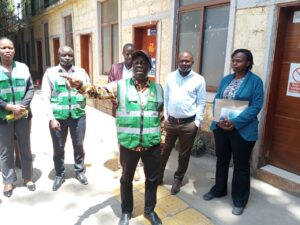
David Njoroge, Osman Khalif Among 8 Summoned Over Eastleigh Building Tragedy

The Nairobi County Assembly’s Planning Committee has intensified its investigation into the deadly Eastleigh building collapse by summoning six individuals, among them senior county officials, a developer and a contractor.
Those summoned include County Government Chief of Staff David Njoroge, Governor’s aide Osman Khalif, Acting Director of Planning and Compliance Tom Achar, developer Joseph Musyoki, Stromax Holding Limited Director John Karuga and Acting Chief Officer for Urban Planning and Development Dominic Mutegi.
The decision follows several invitations issued by the Committee, which the six individuals allegedly failed to honour.
Committee Chairman Geoffrey Majiwa said the summons were issued in accordance with the Assembly’s Standing Orders after members resolved to take further action against those who had repeatedly ignored their invitations.
“We only are acting within the law. We earlier issued invites to them, which they have since ignored blatantly without informing the Committee of their whereabouts or offering an apology,” Majiwa said.
Under Standing Order 187(3)(a), an Assembly Committee has the authority to summon witnesses who fail to appear before it, subject to the prescribed procedure involving the Speaker or the Committee Chairman acting pursuant to a Committee resolution.
The six individuals are expected to appear before the Committee on Friday, November 20, 2026, at 11:00 am, to respond to questions concerning their respective roles in the circumstances surrounding the collapse.
Meanwhile, fresh revelations before the Committee have raised further questions about the county’s building approval process and enforcement of construction regulations.
Assistant Director of Approvals Fredrick Ochanda told the Committee that the developer never obtained approval to construct the building that later collapsed, killing eight people.
Ochanda revealed that although the architect submitted an application for construction approval and paid approximately KSh1.2 million in fees, the application was rejected for failing to meet the minimum requirements.
“From our records, the architect indeed applied for the approvals and paid a fee of 1.2 million shillings, but it was not approved because it did not meet the minimum requirements,” Ochanda said.
The revelation has placed the spotlight on Nairobi City’s development control and enforcement mechanisms, particularly how the construction proceeded despite the absence of approved building plans.
The Committee is now expected to question the six individuals on their respective responsibilities and establish whether there were lapses in the approval, inspection and enforcement processes that may have contributed to the tragedy.